Celebrating our urban trees
Today marks the start of the Urban Tree Festival, a week-long celebration of the benefits and beauty of urban trees. Here on the Heath we’re lucky enough to be surrounded by some incredible specimens of ancient flora, but it’s important that we don’t forget about our valuable street trees.
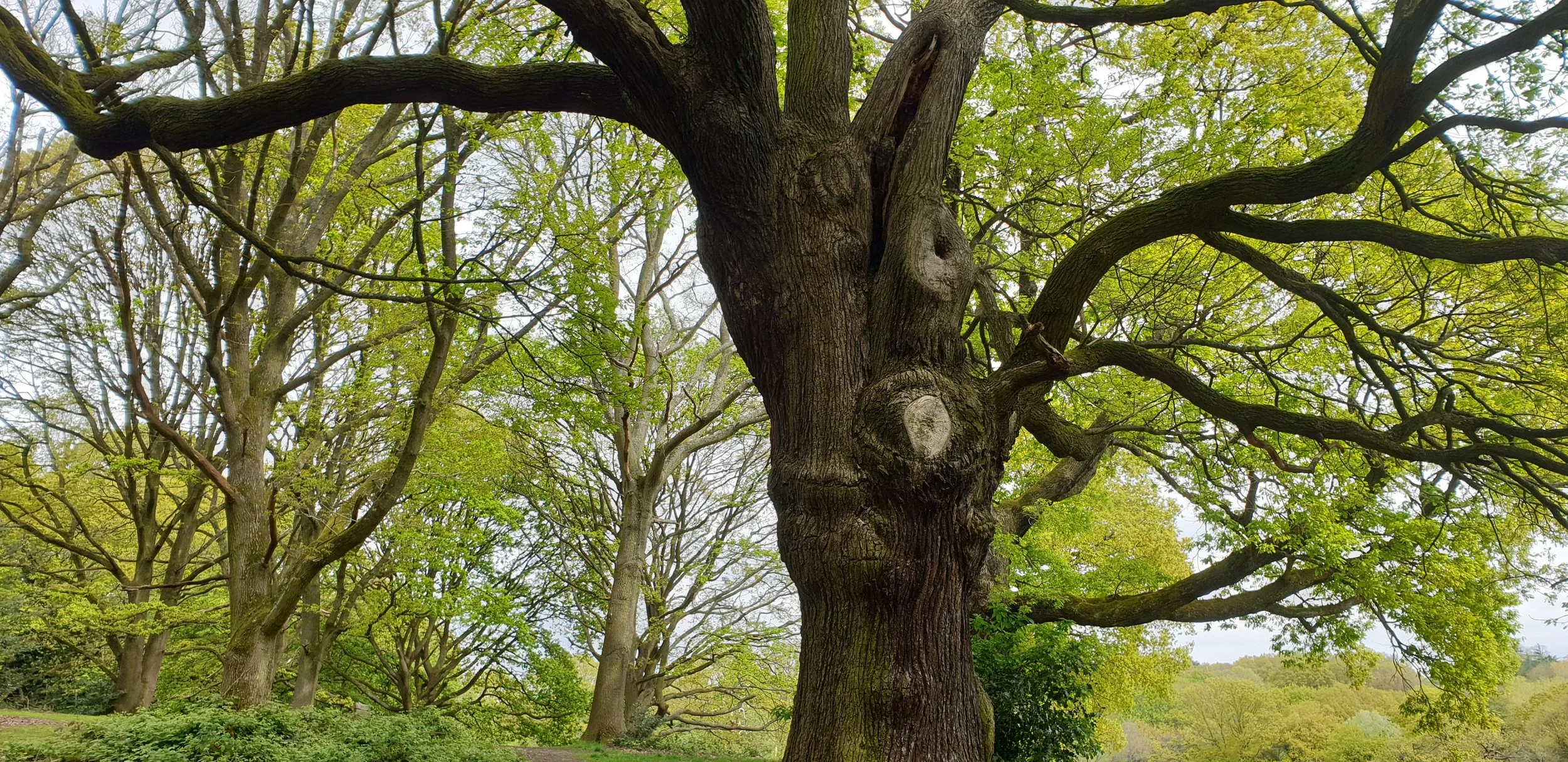
An Oak in the South Meadow
Why are these urban trees so valuable?
Urban trees have a variety of benefits to people and wildlife, including reducing flood risk. Trees intercept rainfall, reducing the amount of rainwater hitting the ground by up to 45%, and slowing run-off into gutters and roads. As well as intercepting rainwater trees improve water quality, filtering out pollutants.
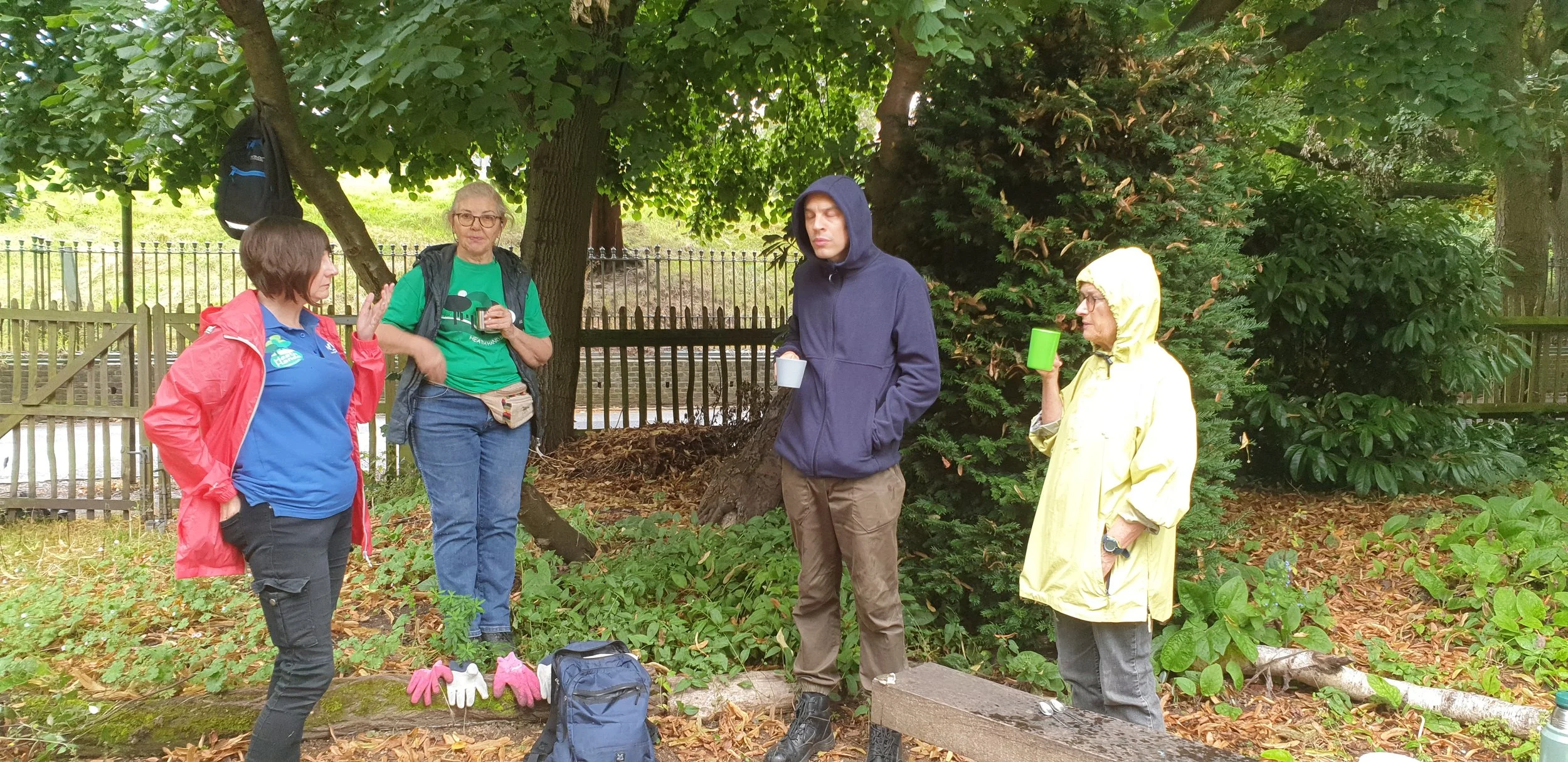
Our volunteers enjoying some tree shelter duing a rainy teabreak!
Trees also lower surrounding temperatures, a vital way of reducing the ‘Urban Heat Island’ phenomenon, in which cities have a higher temperature average than nearby rural areas. Through evapotranspiration, the process in which trees use energy from the air to turn liquid water into vapour, heat from the surrounding air is absorbed. Shade is of course another way trees provide a familiar cooling respite, physically blocking the sun’s rays from hitting the ground.
We’ve mentioned water quality, so it’s only right to talk about the air quality benefits too. Cities can be noisy and polluted, so our street trees are invaluable in providing a dampening effect for noise, and for filtering out air pollutants via their everyday processes.
Equally as important is the benefit trees have to our mental wellbeing. Studies have proven that access to nature can reduce stress levels, alleviate symptoms of anxiety and depression, and stabilise blood pressure levels. A 2015 study found that in London boroughs with higher urban tree density individuals with depression required lower antidepressant prescription rates, helping to alleviate pressures on the healthcare system. Here at Heath Hands we work with trainee doctors to teach them about green social prescribing, the reccomendation of time in nature as a part of treatment for mental or physical ailments.
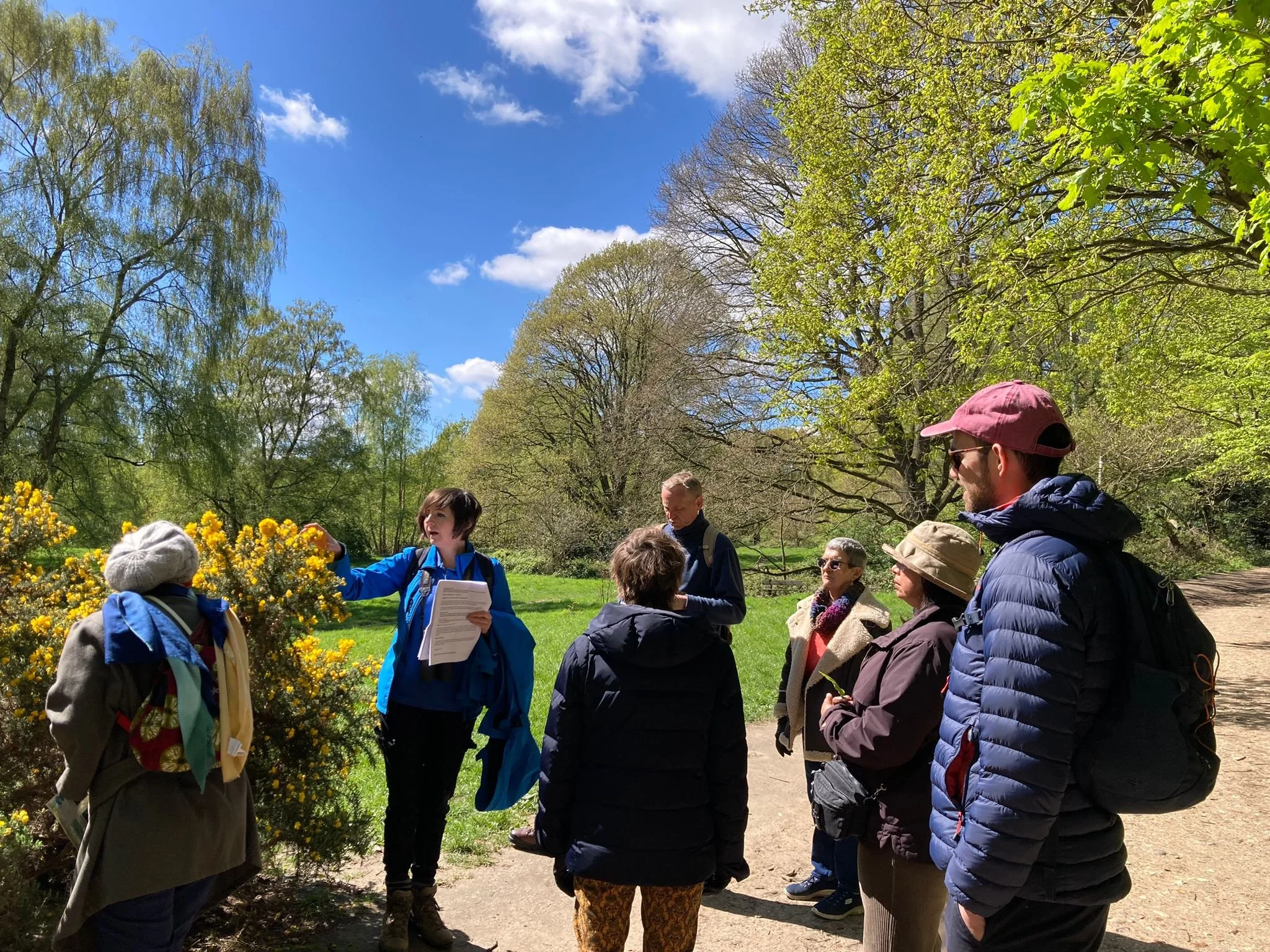
One of our Heath Hands wellbeing walks
Not forgetting the city’s smaller inhabitants - we couldn’t talk tree benefits without mentioning wildlife. Urban areas can be tricky for species to inhabit, food sources are scarcer and habitats are fewer and more separated, so urban trees are vital in supporting biodiversity. An oak tree alone can support a whopping 2,300 species, providing shelter, food and breeding grounds.
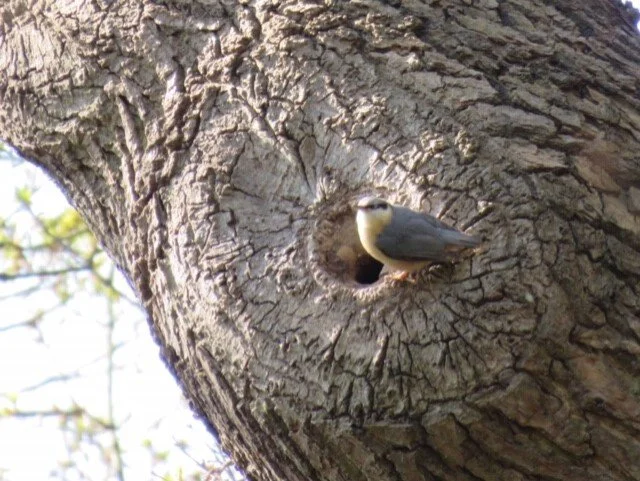
A Nuthatch enjoying a nest hole provided by this oak.
Feeling inspired? Why not have a go at some of our tree-related activities here at Heath Hands. Download our free Hampstead Heath tree spotter sheet and discover ten of the Heath’s most famous trees, or pop by one of our Wild About Hampstead Heath sessions to join in on our ‘Tree Trail’ activity, perfect for kids (and eager grown-ups!). If you’re interested in wellbeing you can practice nature mindfulness in one of our Forest Bathing workshops, or focus in on your surroundings in a Nature Journaling session. Check out our What’s On page for upcoming dates, including any other tree-related walks by our partner organisations.
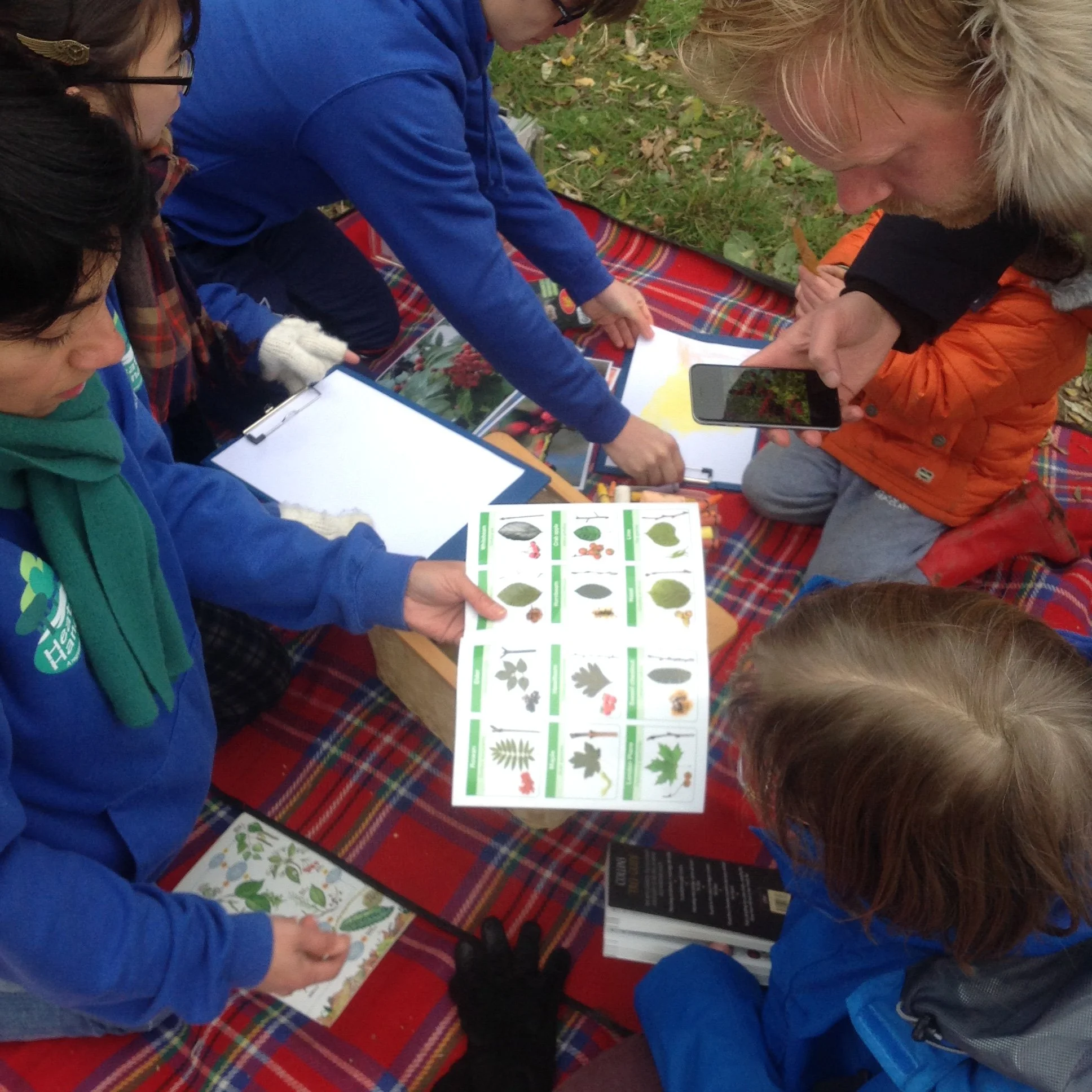
Tree ID with our Wild about Hampstead Heath volunteers