Buzzing for World Bee Day
It’s World Bee Day, a chance to celebrate these vital pollinators and promote ways to help them! Did you know that, as well as the honey bee (1 species), Britain has 25 species of bumblebee and over 250 species of solitary bee? Although like many insects, bees are in national decline, urban green spaces can be great places for bees and Hampstead Heath is no exception. With its meadows, hedgerows and different soil types, the Heath supports many bee species and we’ve been working to create more habitat for them to keep the buzz on the Heath.
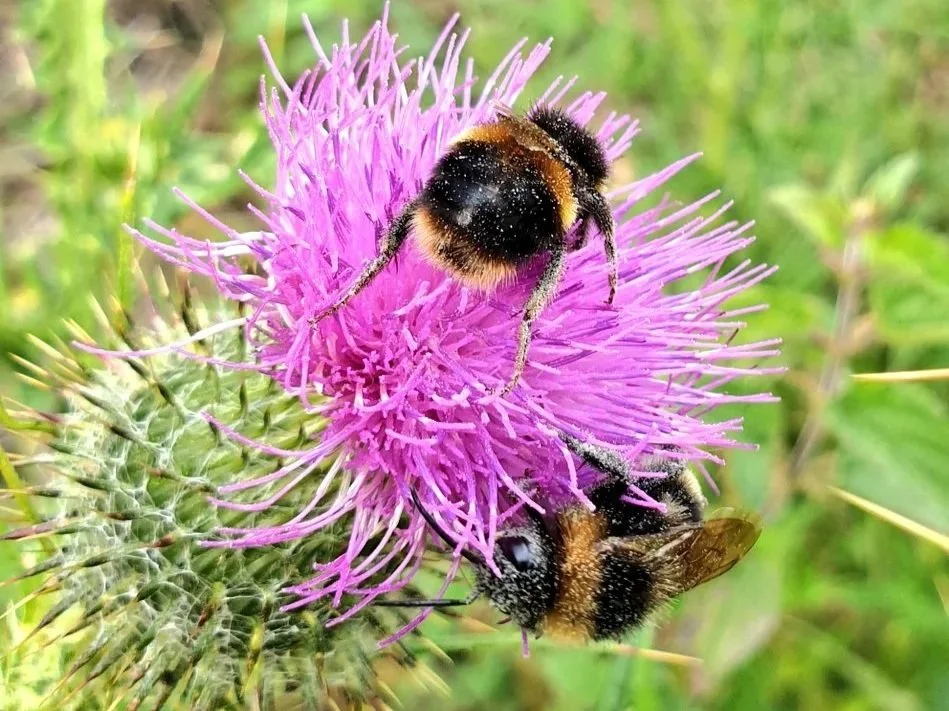
Bumblebees on thistle on Hampstead Heath
Bee bank
Over the past year, in partnership with the City of London’s Learning Team, we have created a bespoke Bee and Butterfly Bank at the Adventure Playground on Parliament Hill. This mound of sandy soil in full sun provides ideal nesting habitat for mining bees. Each female digs her own nest burrow and fills underground chambers with pollen for her growing larvae. We have seen a few nest holes and nesting bees in the bank already. The bank is maintained by our volunteers to keep it open and sunny-the way the bees like it.
Mining bees naturally nest in the bare soils around the Heath, especially in sandy areas such as Parliament Hill, Sandy Heath and Kenwood, and often along paths. The black and white Ashy Mining Bee Andrena cineraria is one of the most distinctive and can be seen into early summer. The Sandpit Mining Bee Andrena barbilabris was discovered new to the Heath last year on a London Natural History Society survey of Sandy Heath.
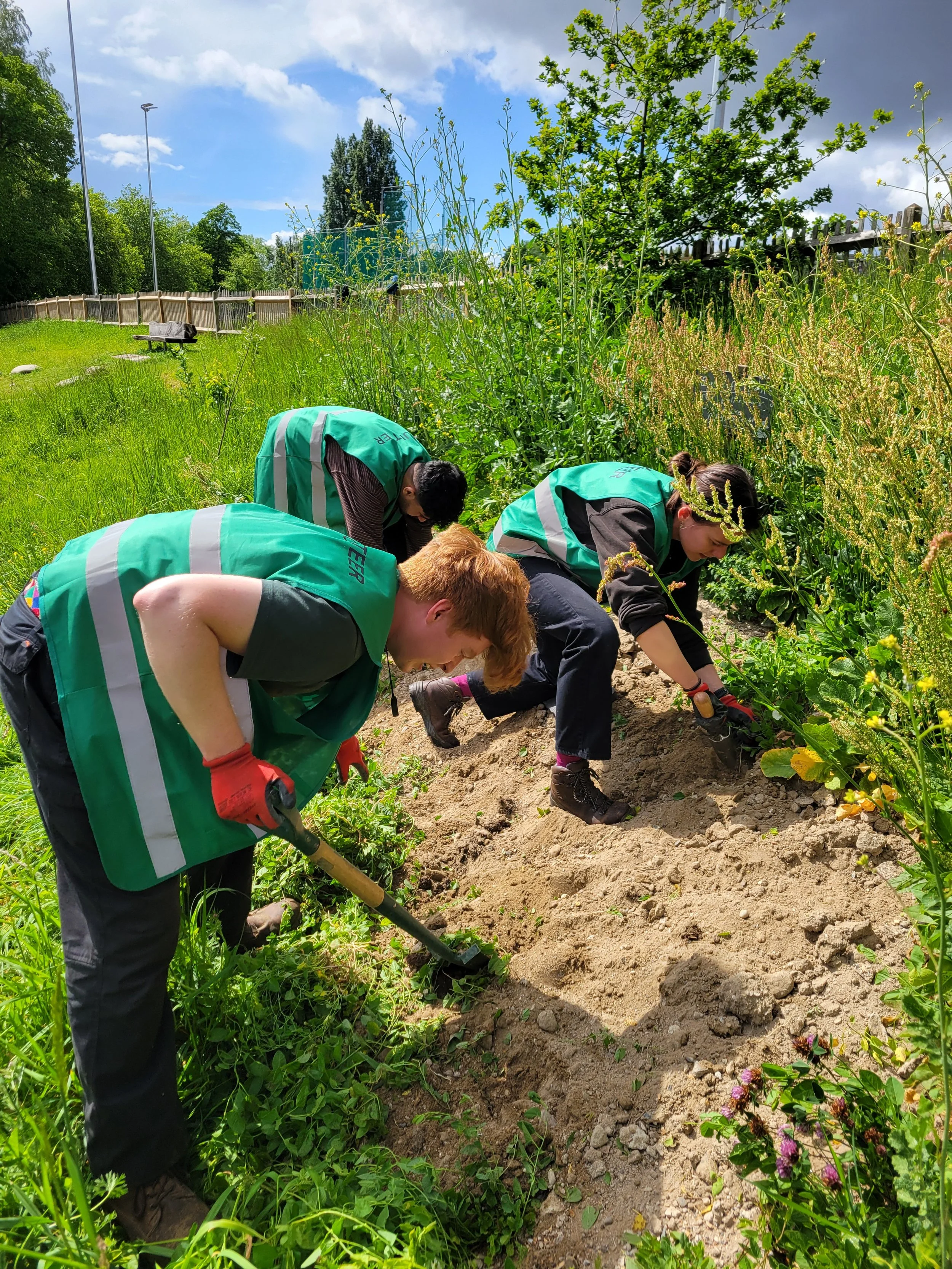
Volunteers helping to keep the bee bank clear of weeds.
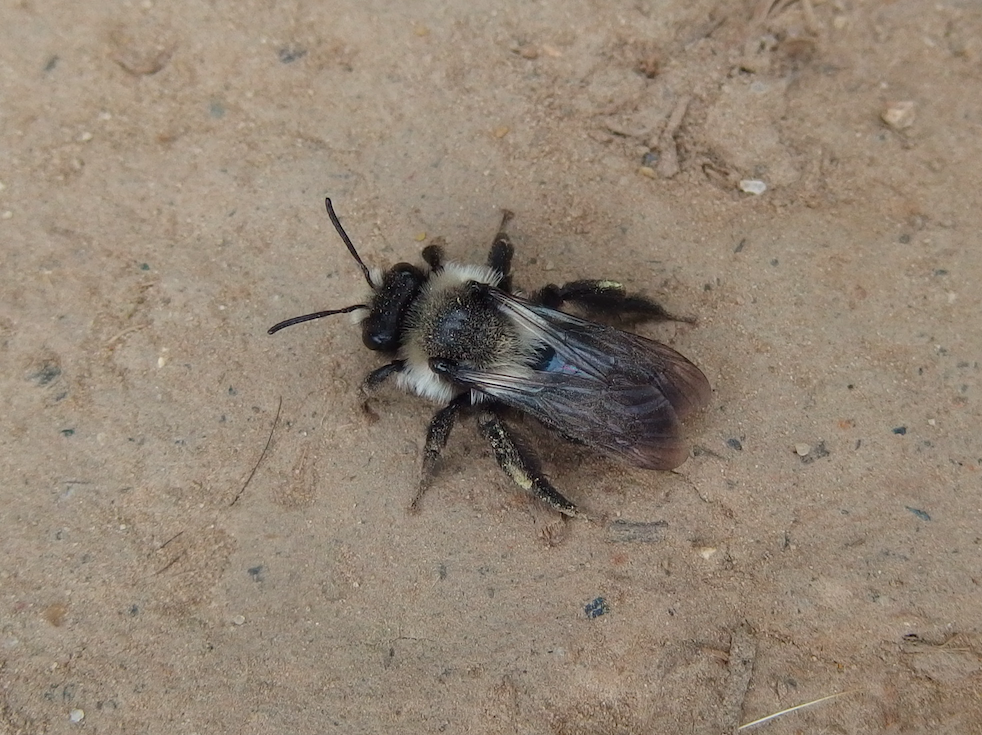
Ashy Mining Bee on a path on the Heath
Flowering hedgerows
As well as a place to nest, bees need flowers to feed from. Blossoming shrubs are the most important sources of pollen and nectar for bees and other insects in spring and we have provided these in abundance by planting new native hedging around Parliament Hill. The Blackthorn, Hawthorn and Dogrose will provide a series of bee-friendly blossoms throughout the spring. They will also provide a habitat corridor, keeping bees fuelled up as they fly across the fields.
Meadows and bee-friendly gardens
Once the hedges have finished flowering, the Heath’s wildflower meadows will provide a diversity of flowers for bees through the summer. The Hive wildflower meadow is a great place to spot bumblebees feeding from knapweeds, wild mustards, teasel and Oxeye Daisies on summer days. We have also been boosting the bee-friendly flowers in the borders of garden spaces we manage, such as Whitestone Garden, the Mixed Pond and the Old Orchard Garden, including Foxglove and Honesty plants grown in our own Hive plant nursery.
We’ve been especially busy creating an all-new bee-friendly border near an entrance to the Heath at our Savernake Road greening project. We’ve planned the plantings to provide flowers throughout spring and summer for bees and other pollinators. This includes spring-flowering Mediterranean Spurge, Lungwort and Honesty, all rich in nectar, alongside summer-flowering Feverfew loved by solitary bees and Russian Sage and Jerusalem Sage both big hits with bumblebees! You can help us maintain these garden spaces by joining our drop-in gardening events.
You can find out which bees and other pollinating insects you can find on the Heath using our new Hampstead Heath Pollinator Spotter sheet. You can download a copy online here or pick one up from our Information Hut at Parliament Hill or Interpretation Centre at Kenwood.
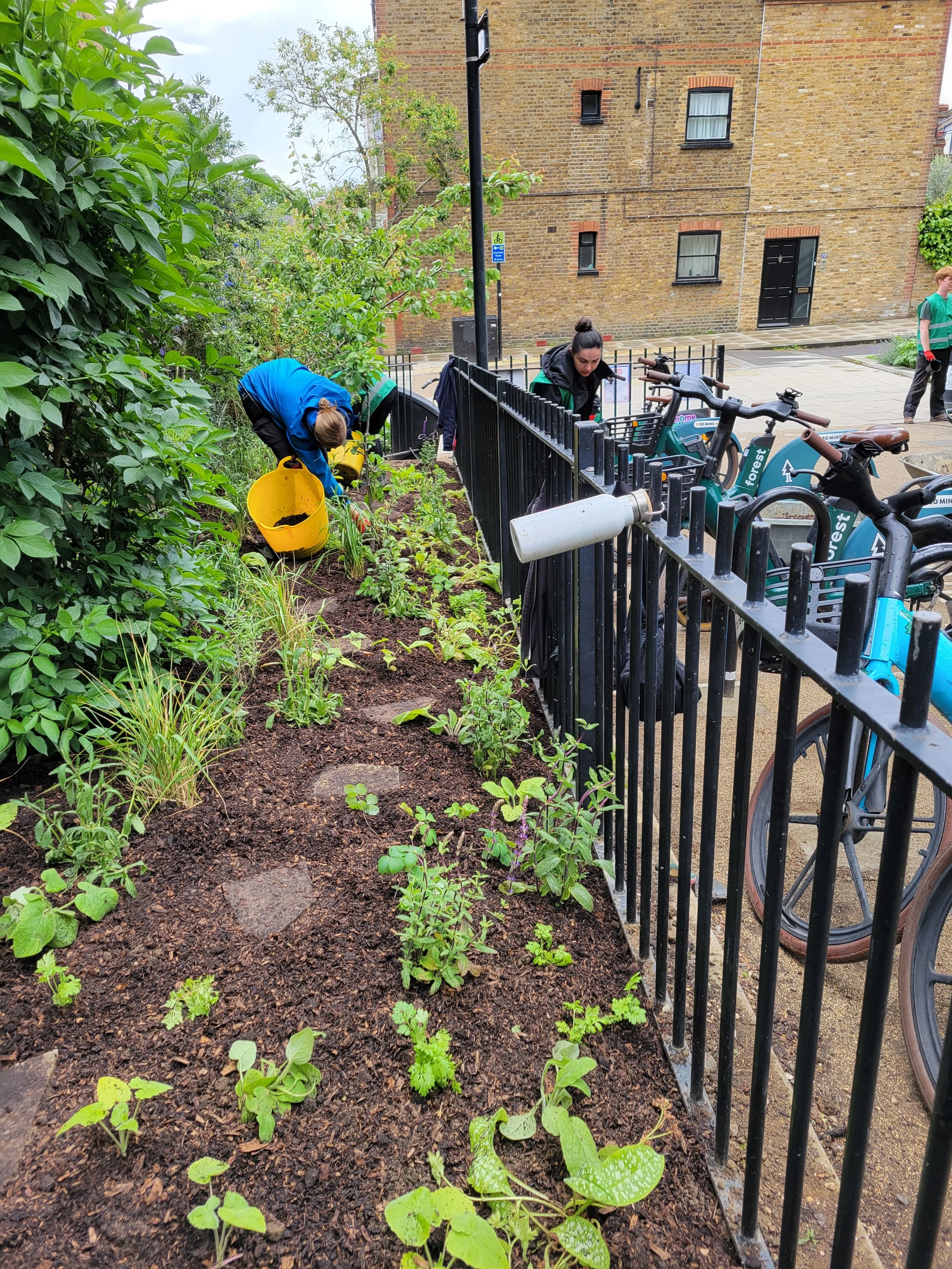
Planting the new bee-friendly border at Savernake Road
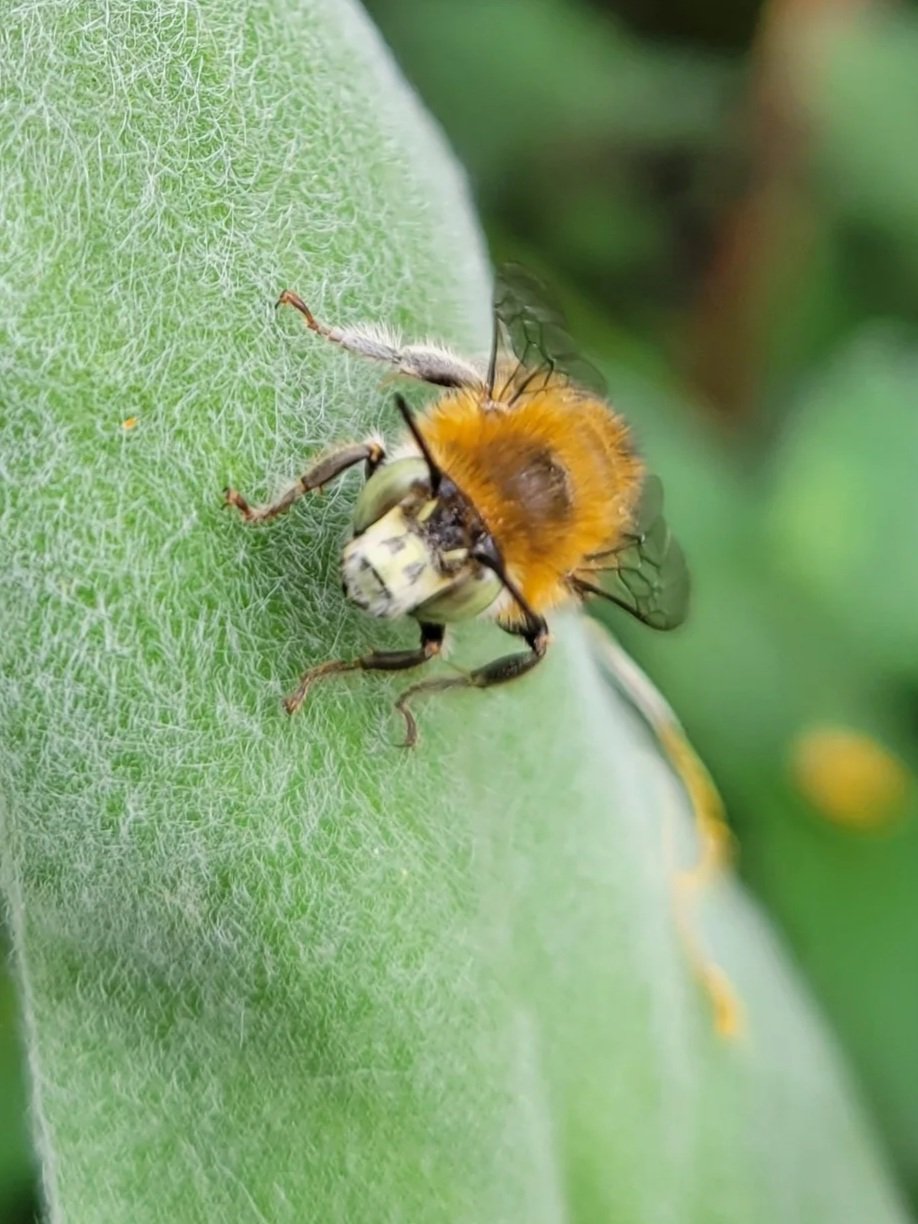
A Four-banded Flower Bee at Savernake