Mud, glorious mud!
As most of you will have noticed, the start of 2026 has been very wet, with rain most days since the beginning of the year. This has meant parts of the Heath have become a bit of a mud bath in places, with new ‘wetland’ habitats popping up in all over the place in addition to our many existing ponds and wetlands…
While the conditions can be a bit of a hindrance, they are a good opportunity to celebrate some of the muckier work that we get up to! Working with the Heath’s Conservation and Ranger Teams, our volunteers have been donning their wellies and getting stuck into lots of soggy work.
A big part of this work is a supporting a City of London project focusing on creating more ‘leaky dams’ and barriers along the water courses. These small dams are made from branches and other natural materials and help slow water flow, alleviating flood risk downstream, retaining sediment to improve water quality and enhancing the surrounding habitats for wildlife.
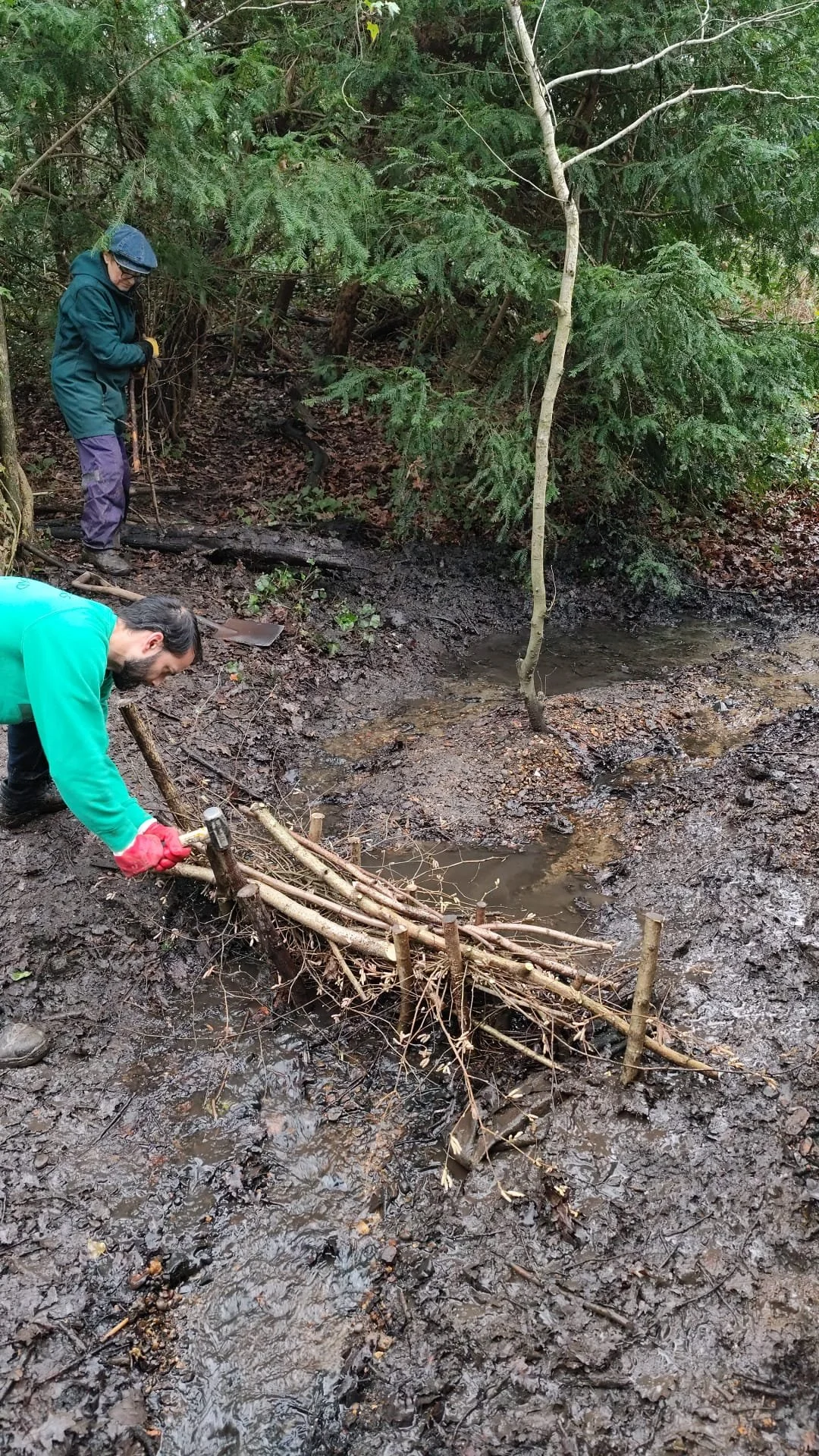
Leaky dam construction
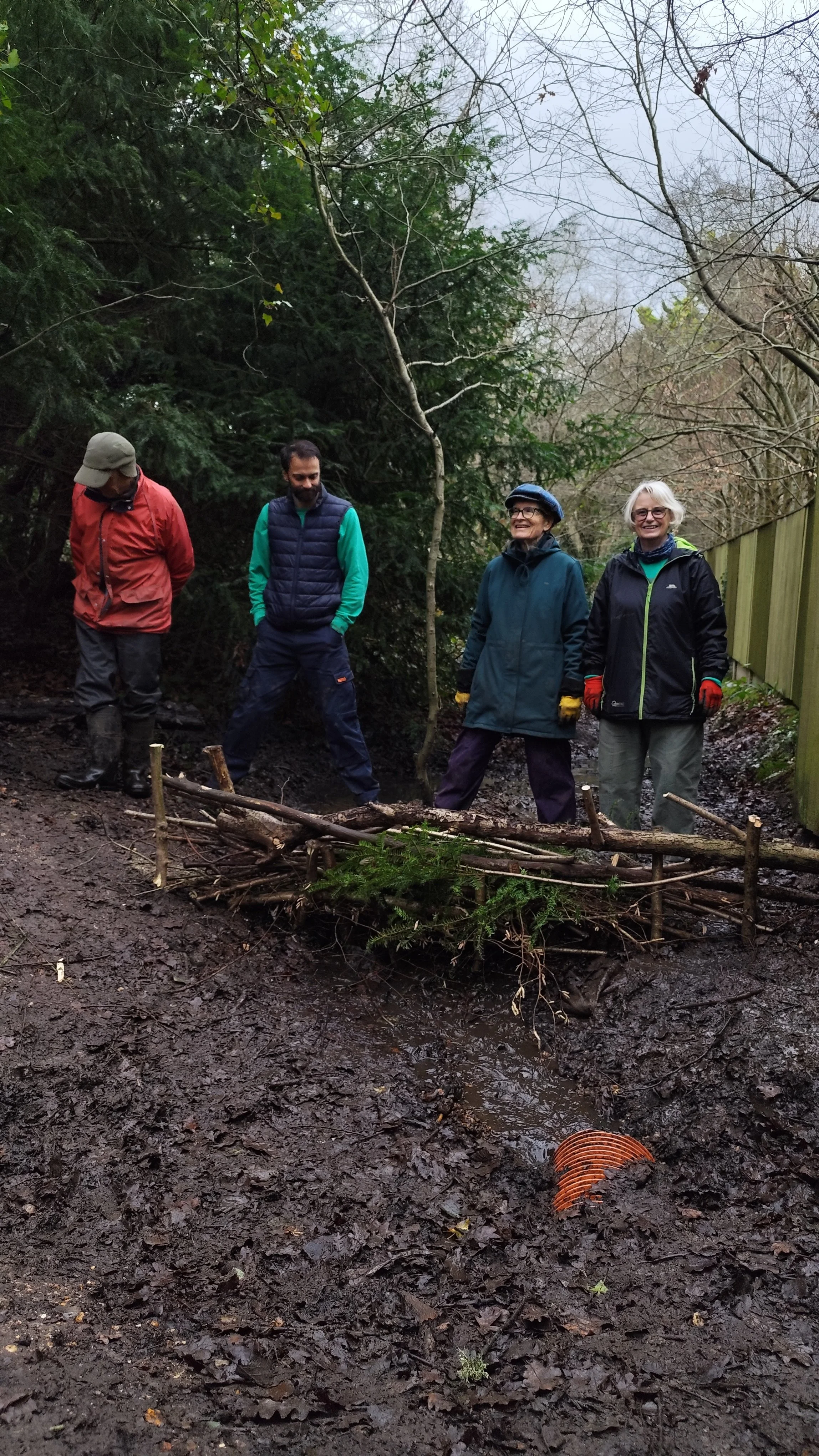
Proud volunteers!
Alongside the dams, our volunteers have also been creating channels and gulleys to direct water into the main ditches and on into wetland areas, rather than pooling on paths and causing erosion (and more mud!).
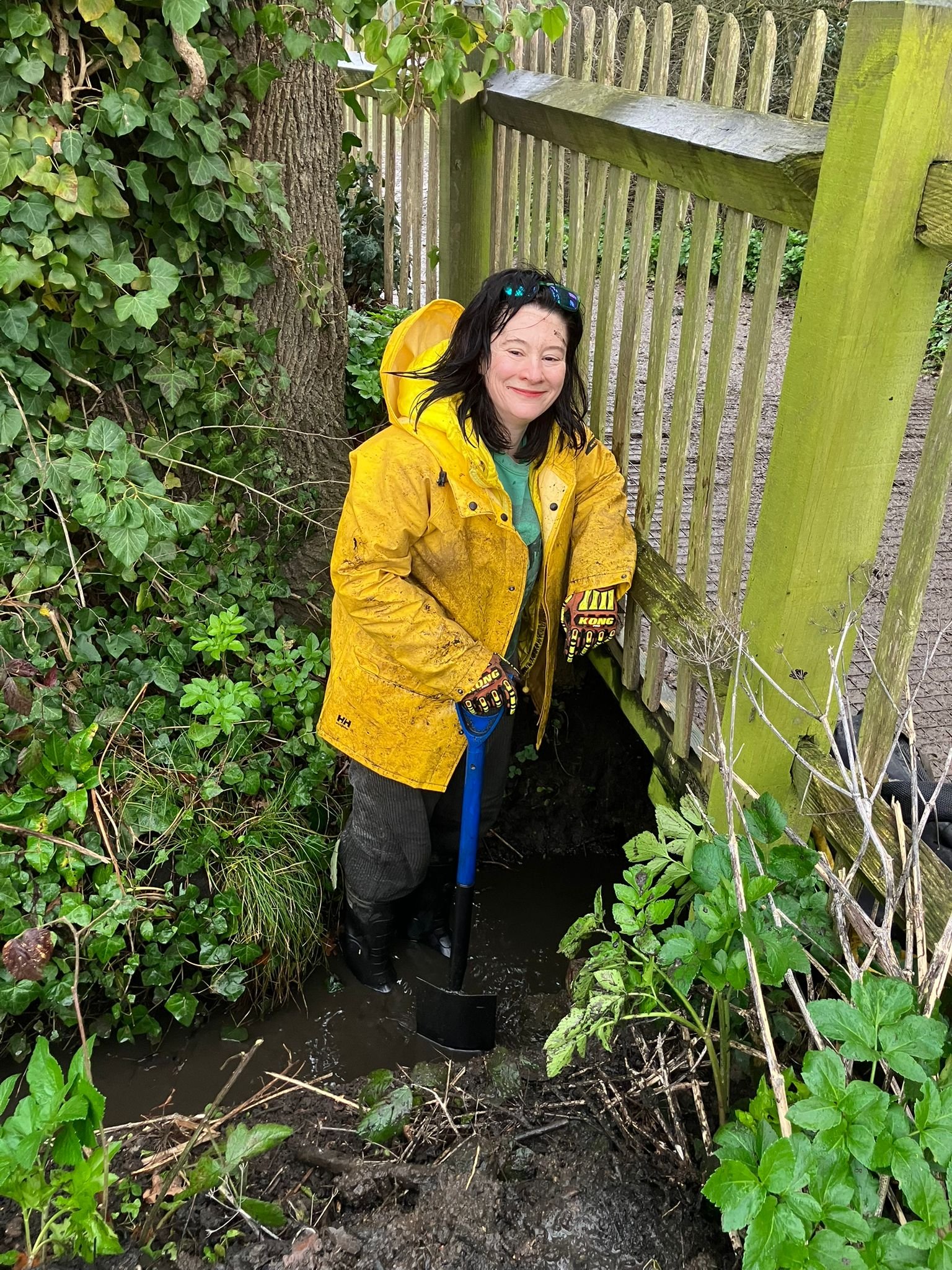
Fun in the mud!
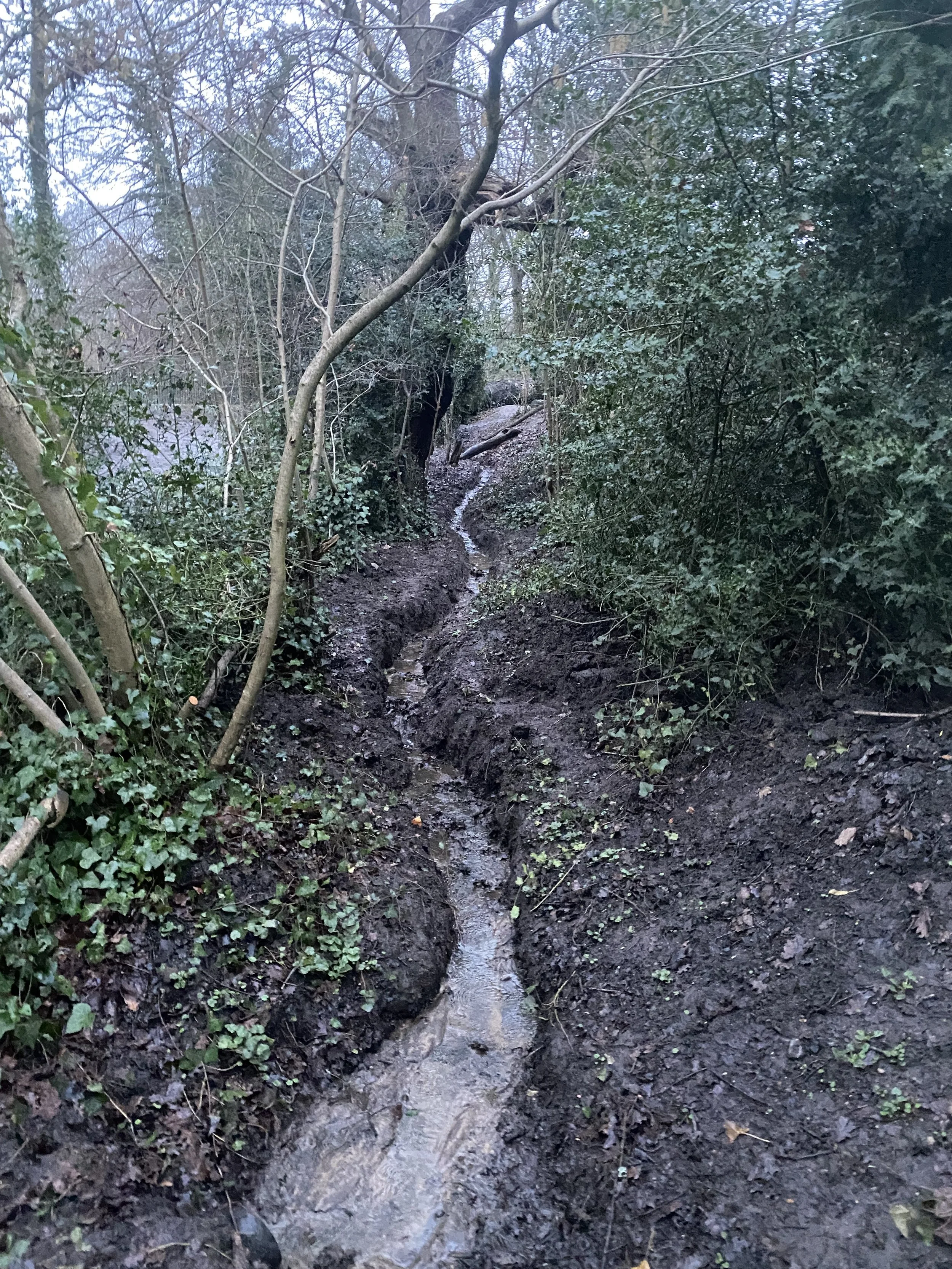
A completed gulley
Another key area of muddy work on the Heath is work on our existing wetland areas, for instance coppicing vegetation (and adding more leaky dams!) along the Fleet Stream - one of our conservation groups pictured below between the Viaduct Bridge and Lime Avenue
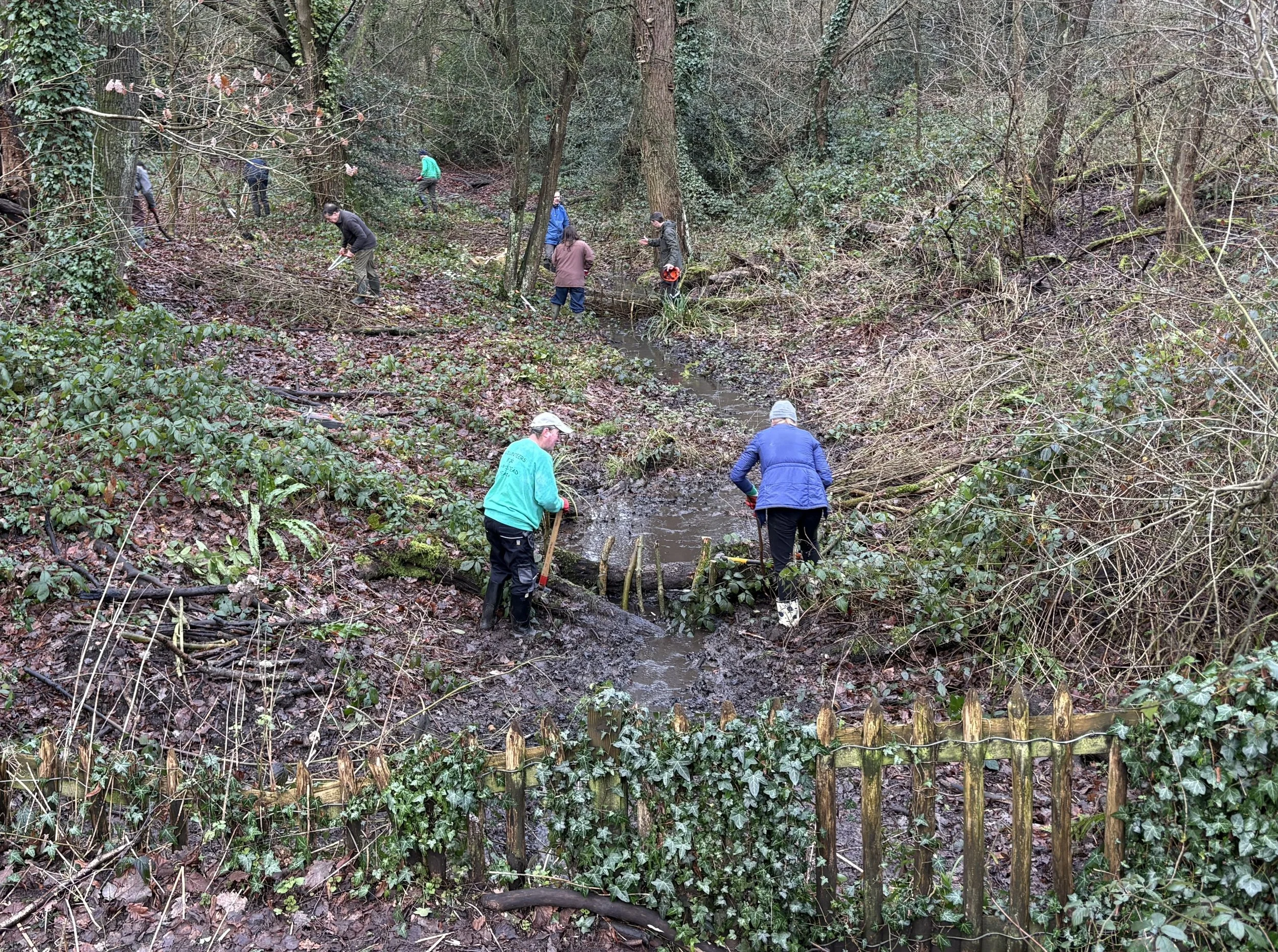
Fleet stream conservation work
As you may have seen on the news, all the rain we have had this season has caused flooding in many parts of the country. In addition to interventions such as leaky dams, wider conservation projects such as our hedge creation programme are also important for flood mitigation as they are excellent at flood reduction. While our new hedgerows will take a few years to fully establish they will provide flood defences for the years to come.
Another related task that has been keeping the Heath’s teams and our volunteers busy recently, has been addressing compacted soil (caused by footfall, often creating desire lines). With fewer air spaces, water infiltration is limited and causes rainfall to run off the surface, increasing the risk of localised flooding and erosion. When the ground is wet, soil is at higher risk of compaction as soil particles are more mobile and can rearrange into a denser structure. With repeated footfall, these areas often turn in to gullies and the issue is compounded. To help combat this, alongside paths and in grassland areas, we have been working to decompact the soil with tools and machinery, then fencing or dead hedging off sections to allow the ground to recover. In places we are also able to resow the grass, and add wildflower mix to enhance biodiversity.
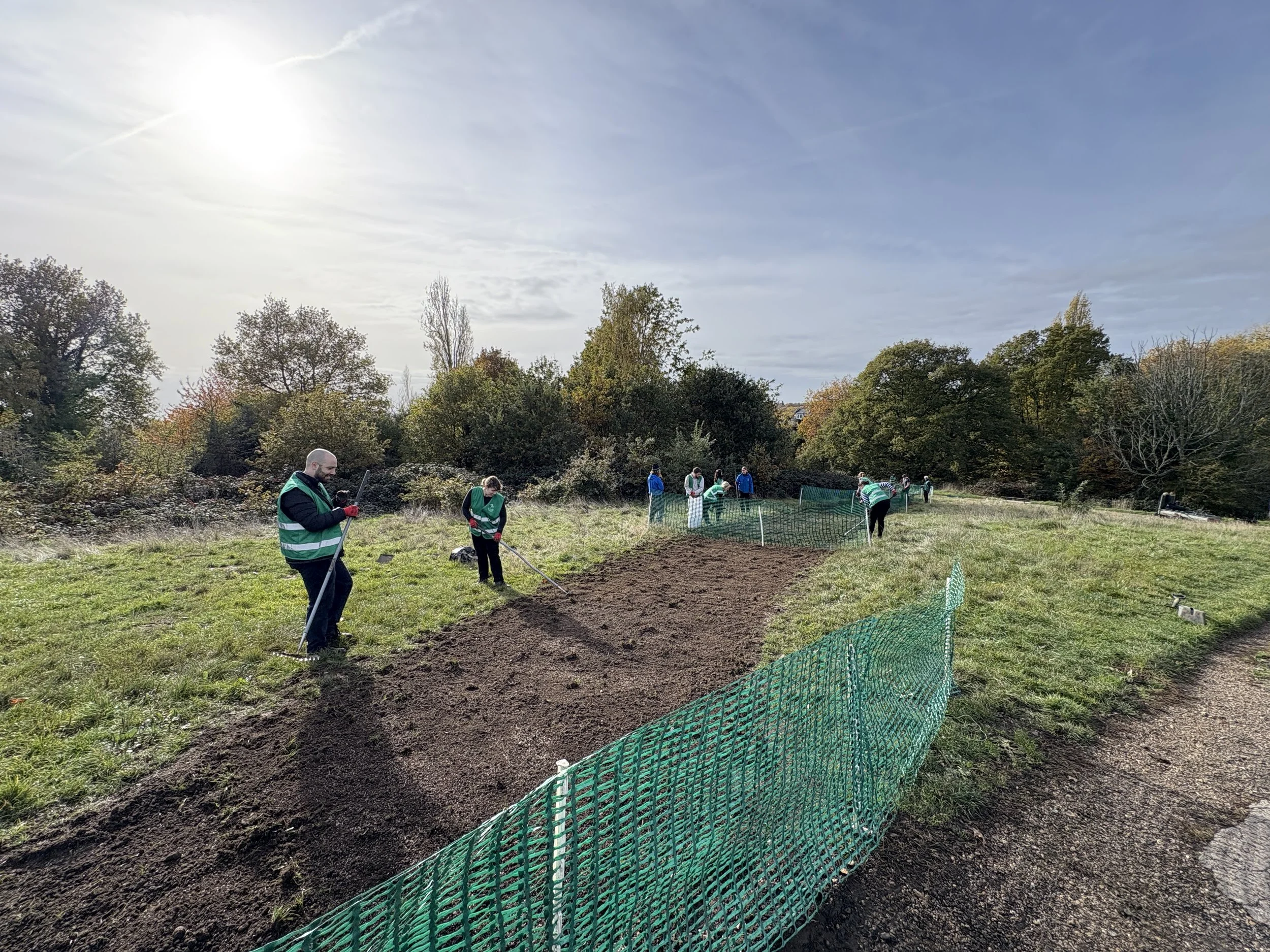
Ground decompaction and restoration on Parliament Hill
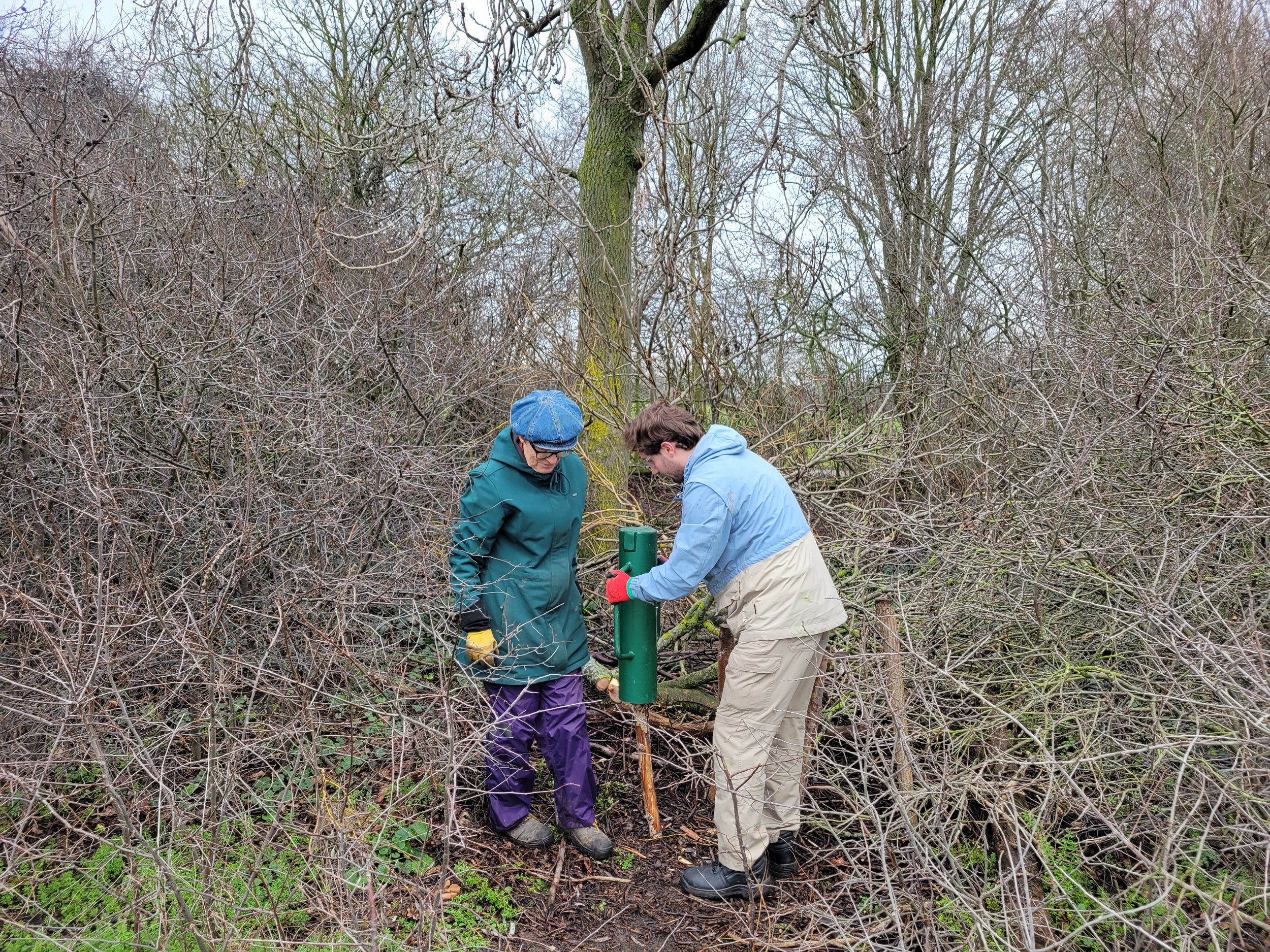
Conservation volunteers creating dead hedge barriers to allow compacted soil to recover
For our trees, compacted soil reduces oxygen availability and access to water and nutrients - all of which are critical in particular for older trees whose root systems may already be under stress. The Heath’s Arboricultural Team have been busy over the Winter protecting some of the Heath’s veteran trees with fences but also by a new technique called geoinjection. This involves using a high-pressure tool to gently break up the compacted layers of soil below the surface. Healthier soil also boosts microbial activity and overall soil health. This enhances tree stability and resilience to drought and disease, and thus increasing long-term survival.
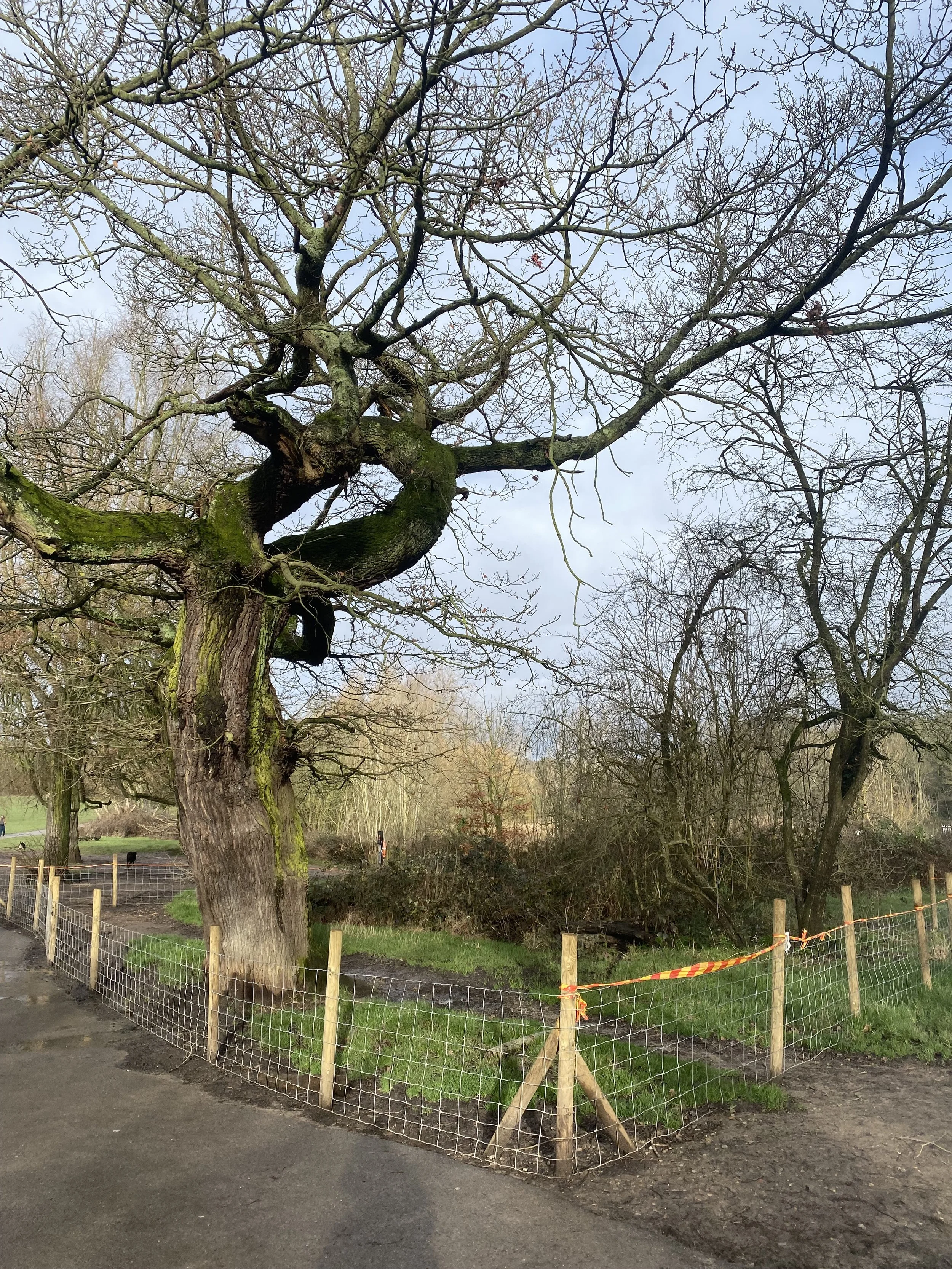
A fenced-off oak tree after geoinjection
Weather forecasters predict that, with climate change, wet winters are likely to be more frequent. As visitors to the Heath, espectially while the ground is very wet, we can all help this work along by avoiding walking on very muddy, heavily compacted areas, especially under old trees, and by respecting temporary fencing and dead hedges which allow sections of ground to recover.
Do you want to find out more about habitats and our conservation work? Why not join one of our upcoming nature walks and rambles - next up, Sandy Heath and the Extension on 21st February. All details on our what’s on page.