Horticulture at Heath Hands
As an environmental charity we work across a wide range of areas: conservation, community, wildlife protection and… horticulture! Horticulture refers to the practice of garden cultivation and management and, here at Heath Hands, we’re involved in every step on the process - read on to learn more about what we get up to.
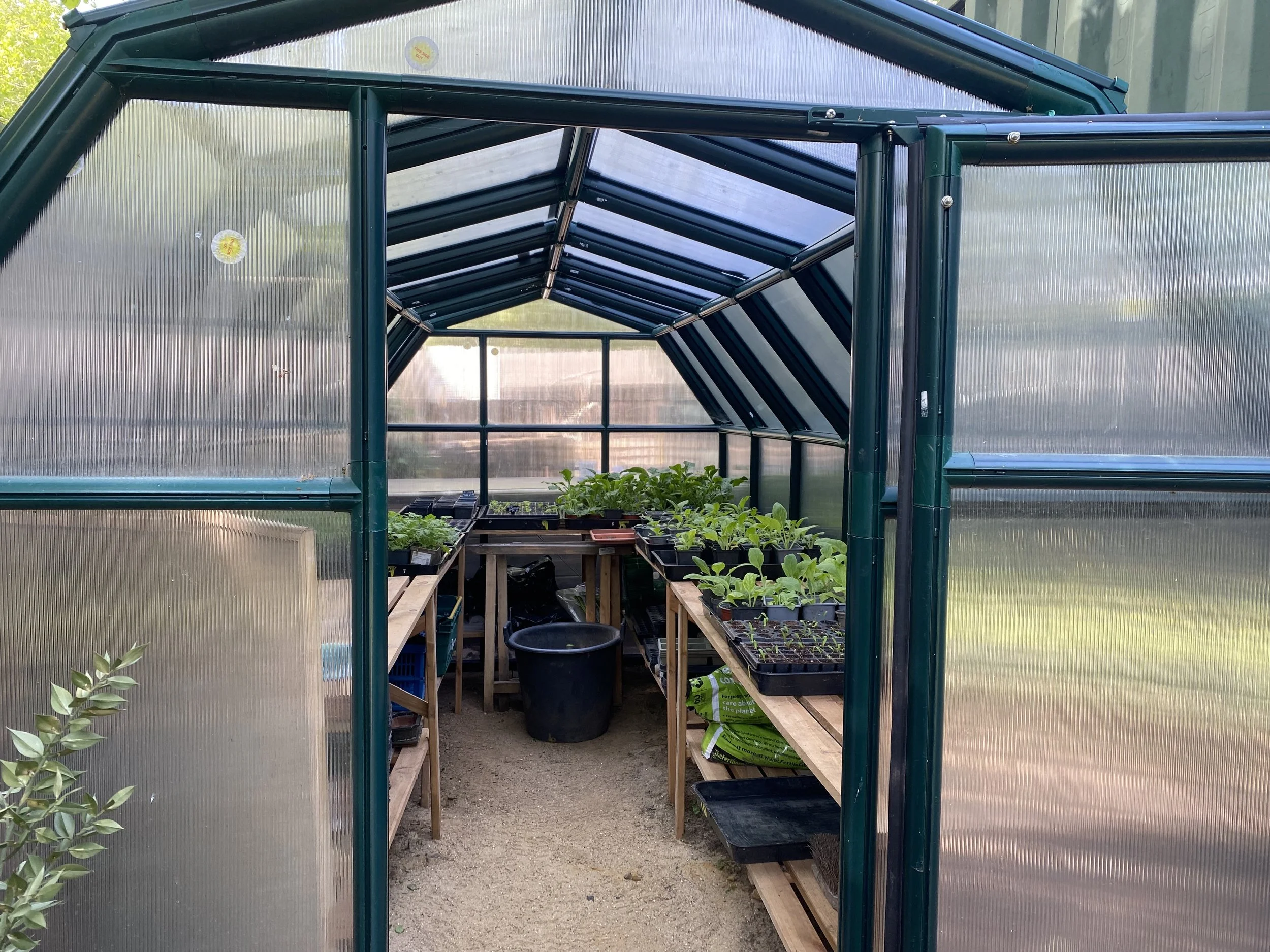
A peek inside our greenhouse
Plant nursery
At our home base the Hive is our plant nursery, a greenhouse and yard space where plants go from seed to site-ready. A large amount of our seed is collected from our existing plants such as from our wildflower meadow or Savernake bridge areas - pictured below are some drop-in volunteers harvesting Honesty (Lunaria annua) seeds, and some germinating Bear’s Breeches (Acanthus mollis) that was recently harvested and sown.
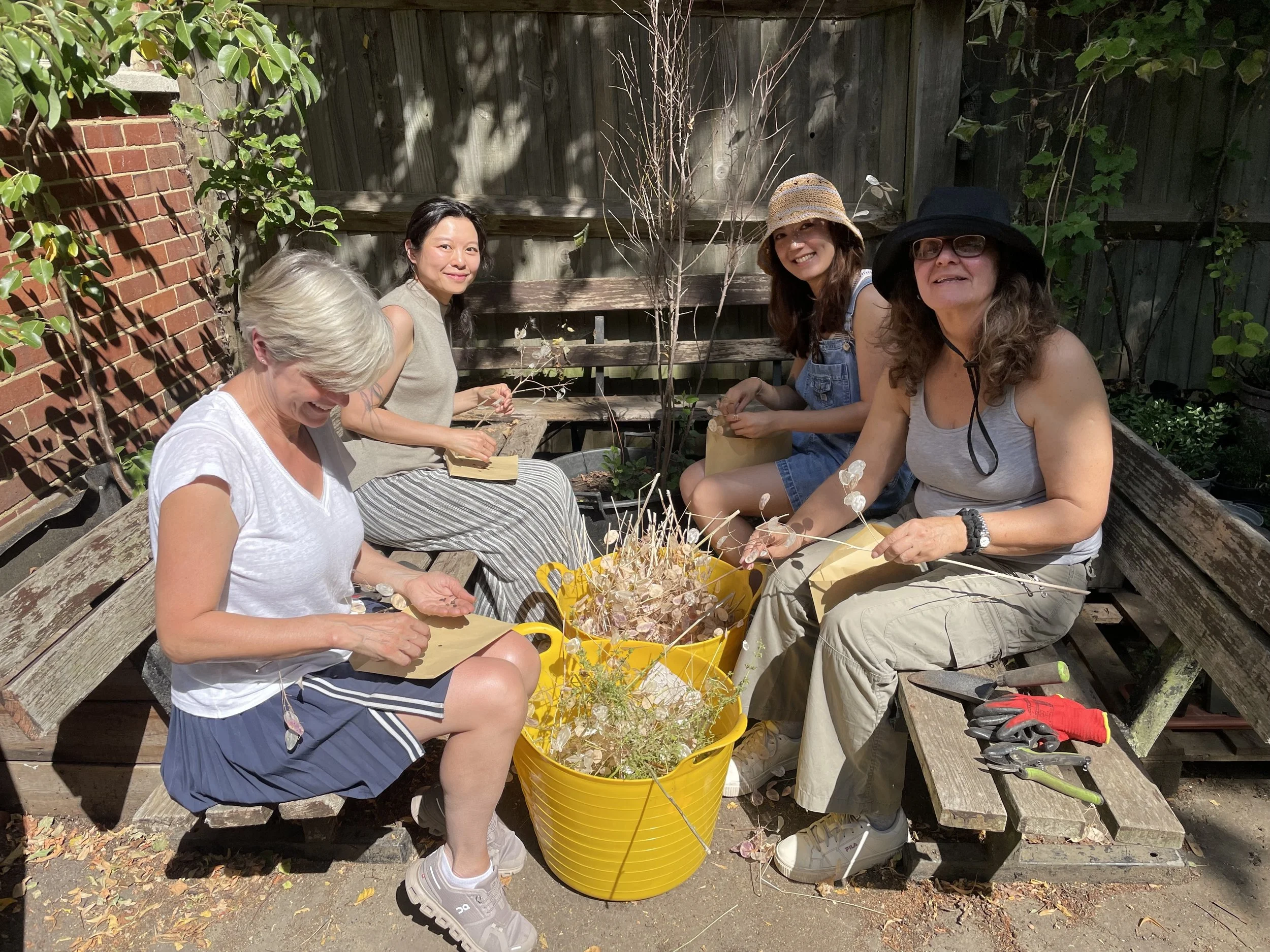
Honesty harvesting
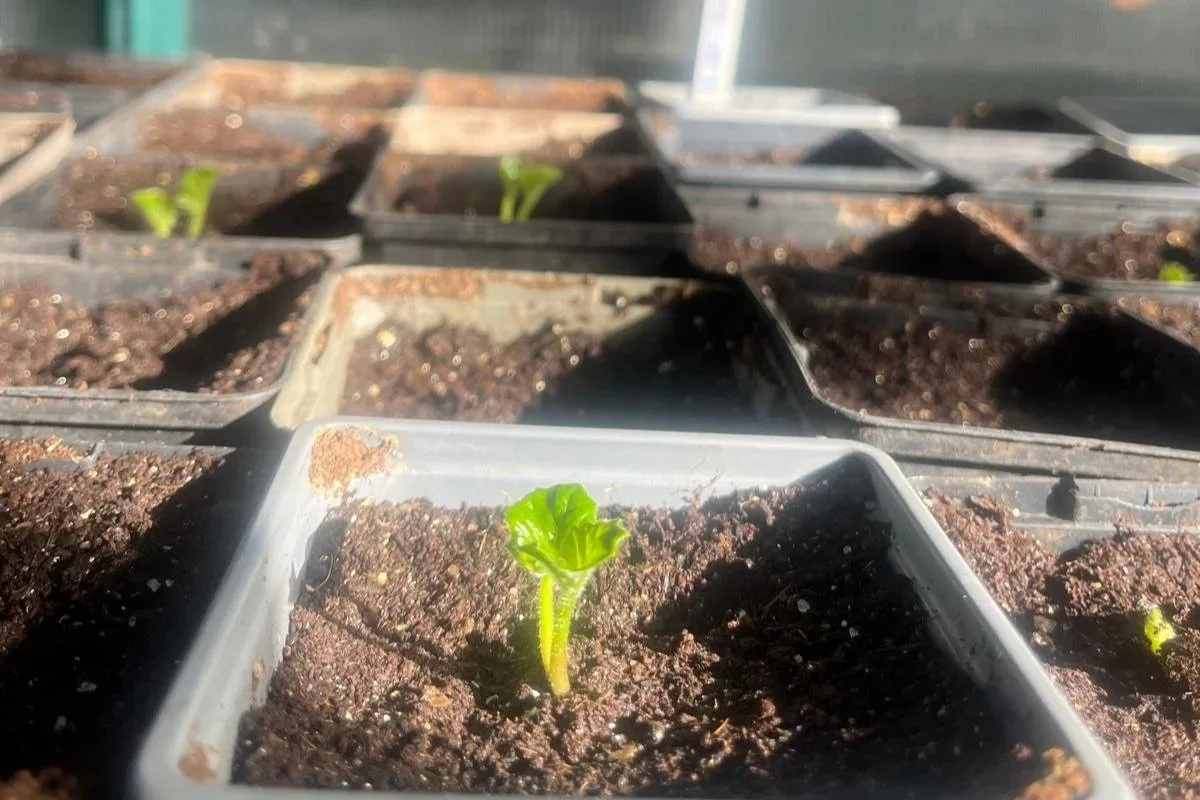
Acanthus seedlings germinating
Another way of propagating plants is by cuttings, where a small section of a plant is removed and re-potted to grow into its own separate plant. This is a great way of essentially making plants for free, multiplying what you have to help fill the space. We previously took cuttings of an Aloe Vera and Tradescantia, and the resulting cultivated plants can now be purchased from our Heath Info Hut shop.
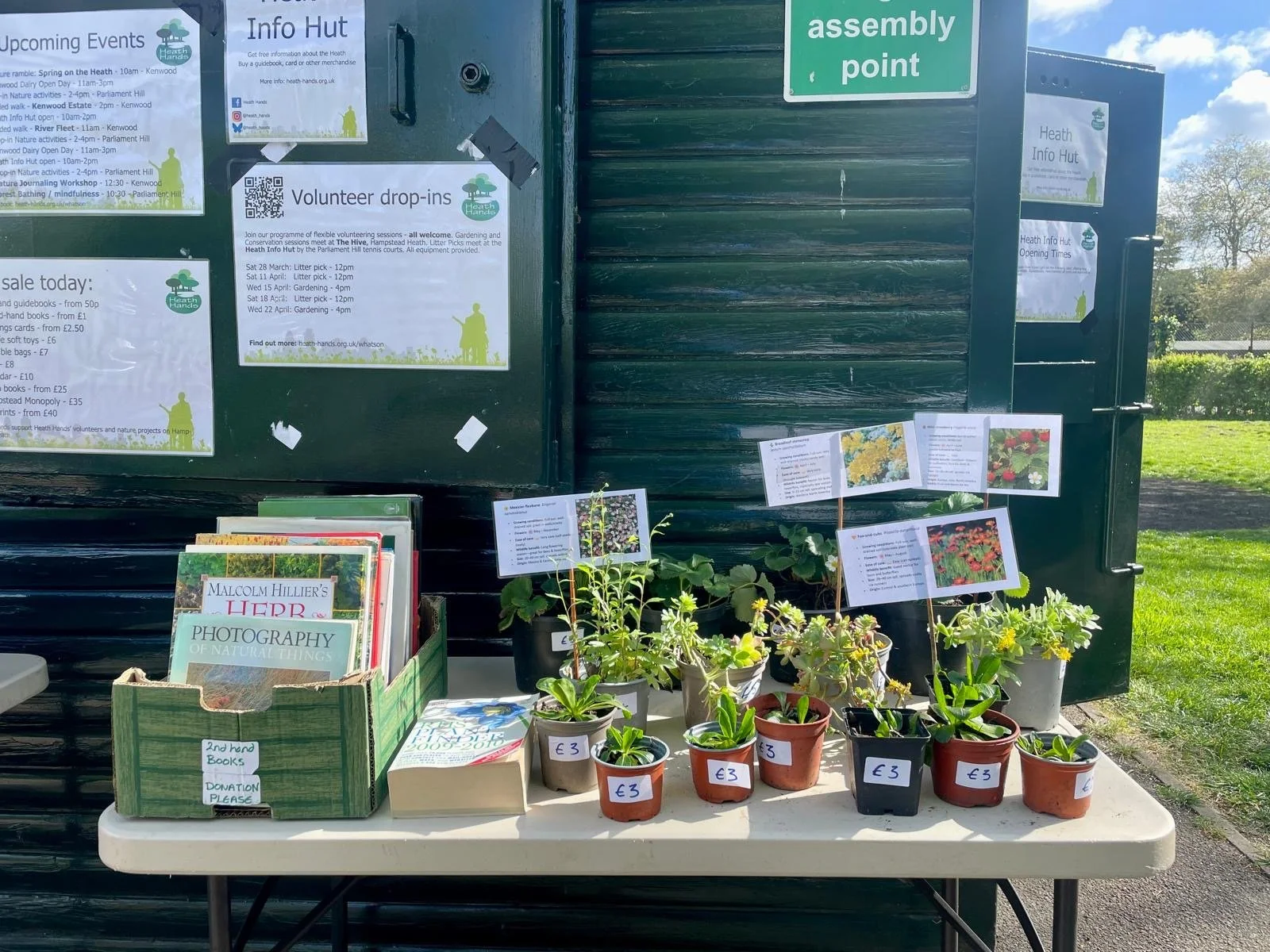
Home-grown plants for sale at the Heath Info Hut
Our young plants stay in the nursery until they are strong enough to be ‘hardened off’, when they’re moved to our yard area. This gets them used to the natural elements, readying them to be planted in our sites across the Heath. Pictured below are some Foxgloves (Digitalis purpurea) being planted in the Old Orchard Garden recently. As well as the obvious cost-cutting benefits growing plants on-site in the nursery is also great for sustainability, reducing fuel emissions produced during the transport of ordered plant plugs.
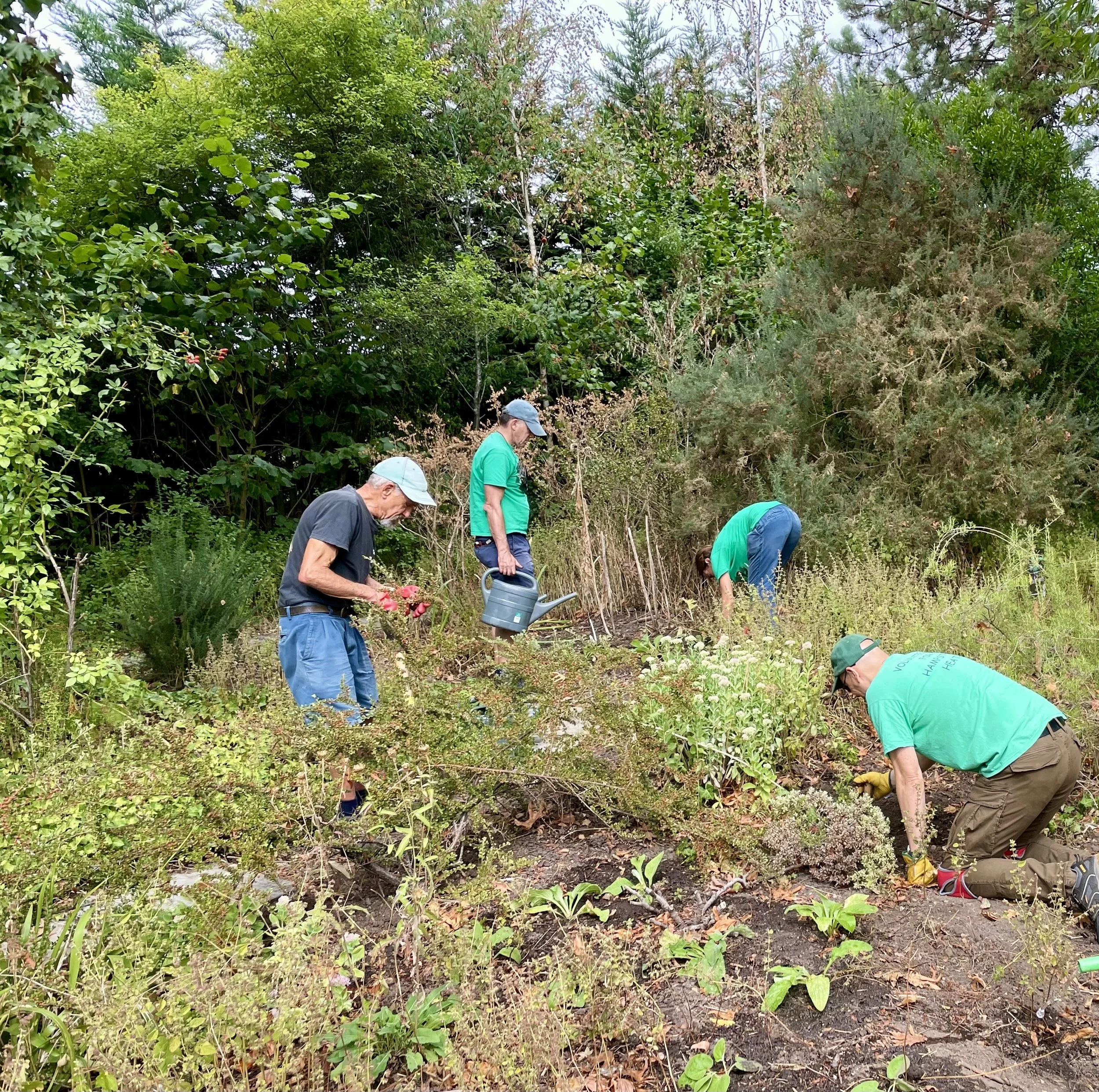
Planting up in the Old Orchard Garden
Open gardening sessions
Our weekly flexible gardening sessions are often held in our nursery or Savernake Bridge garden. These are a great chance to start getting involved in gardening without the need for a regular commitment and are open to participants of all ages and experience. Tasks can include working in our nursery, ‘potting on’ plants that have grown too large for their current pots, weeding, pruning and other maintenance tasks in our Savernake Bridge beds, planting bulbs, sowing seeds, pruning and weeding hedges and shrubs and more. Take a look at our open volunteering page to find out more, and check out our upcoming dates.
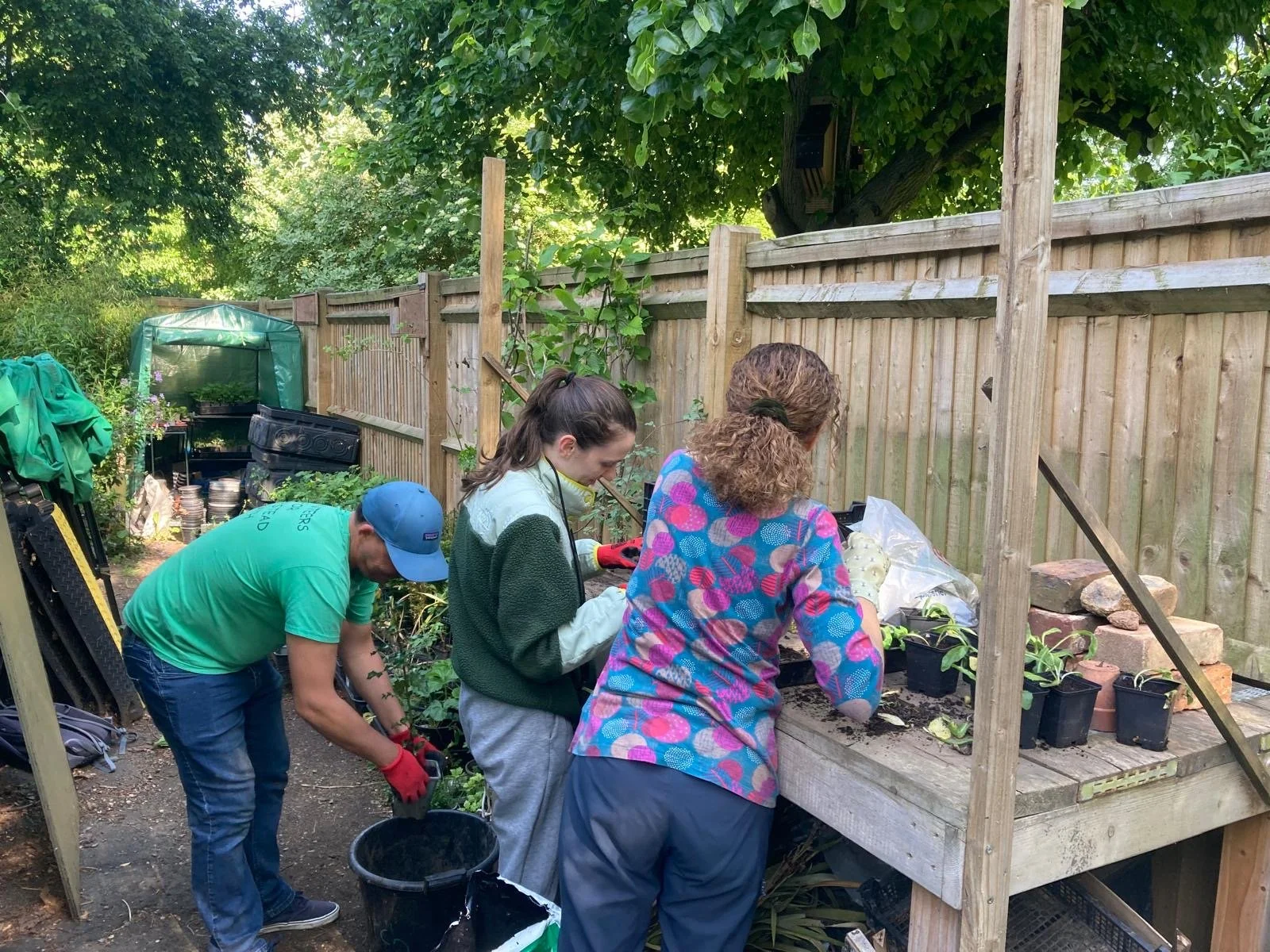
Potting on during a drop-in session
Savernake Bridge Garden
Unlike most of the Heath which definitely has a wilder feel Savernake Bridge hosts our amenity beds, a more traditionally manicured area with individual shrubs, trees and herbaceous (not woody) plants. In these beds we weed out plants which we allow to grow freely in other places like Herb Robert (Geranium robertanium) or stinging nettles (Urtica dioica) to give a more neatly maintained look. This is Heath Hands though, so we’ve got a few bug hotels and stag beetle loggeries in the mix too! Savernake Bridge has had a dramatic transformation in recent years, you can find out more here.
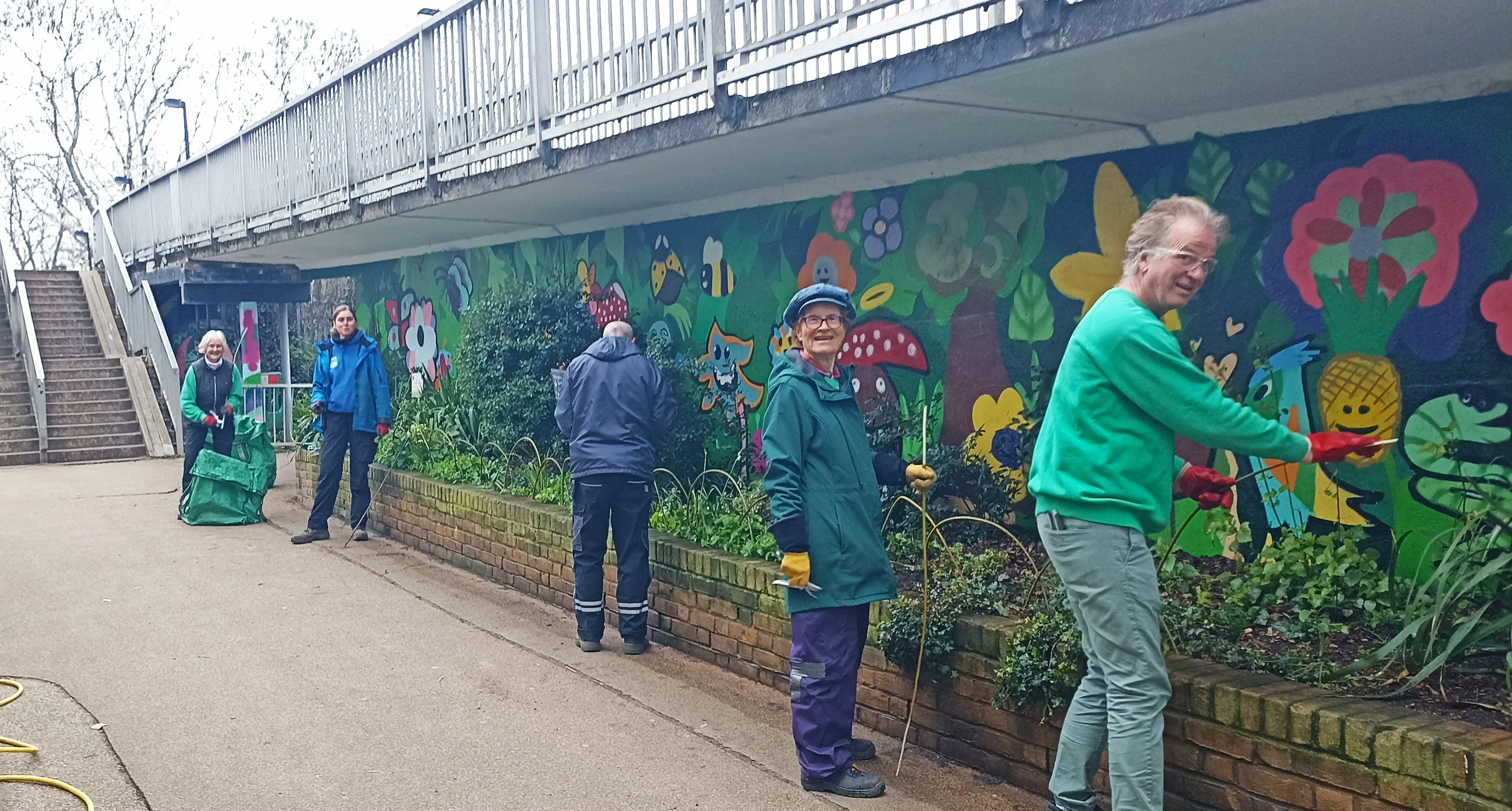
Installing a fence to protect the beds at Savernake Bridge
Ornamental Gardens
Our conservation volunteers get in on the action too, with regular gardening sessions at Golders Hill Park and the Hill Garden and Pergola where they can flex their green fingers. Half of our new Queen’s Greens sessions also have a horticultural focus. These sites are more ornamental, and tasks could include raking leaves from beds and paths, weeding, removing invasive species or pruning shrubs to encourage new growth, working alongside the City of London Horticulture teams to help maintain the beauty of these historic areas. Read more about the history of these sites here.
Keats House is another site looked after by Heath Hands volunteers with a more formal layout. Here you’ll find delicate cultivars (‘cultivated varieties’ - plants bred for specific characteristics) grown from bulbs each year, as well as a selection of more rare shrubs and trees, including an ancient Black Mulberry (Morus alba) which was one of 70 trees nationwide to be selected as part of the Queen’s ‘Green Canopy’ in 2022. We may be biased but we think these sites are definitely worth a visit - putting on a show in all seasons.
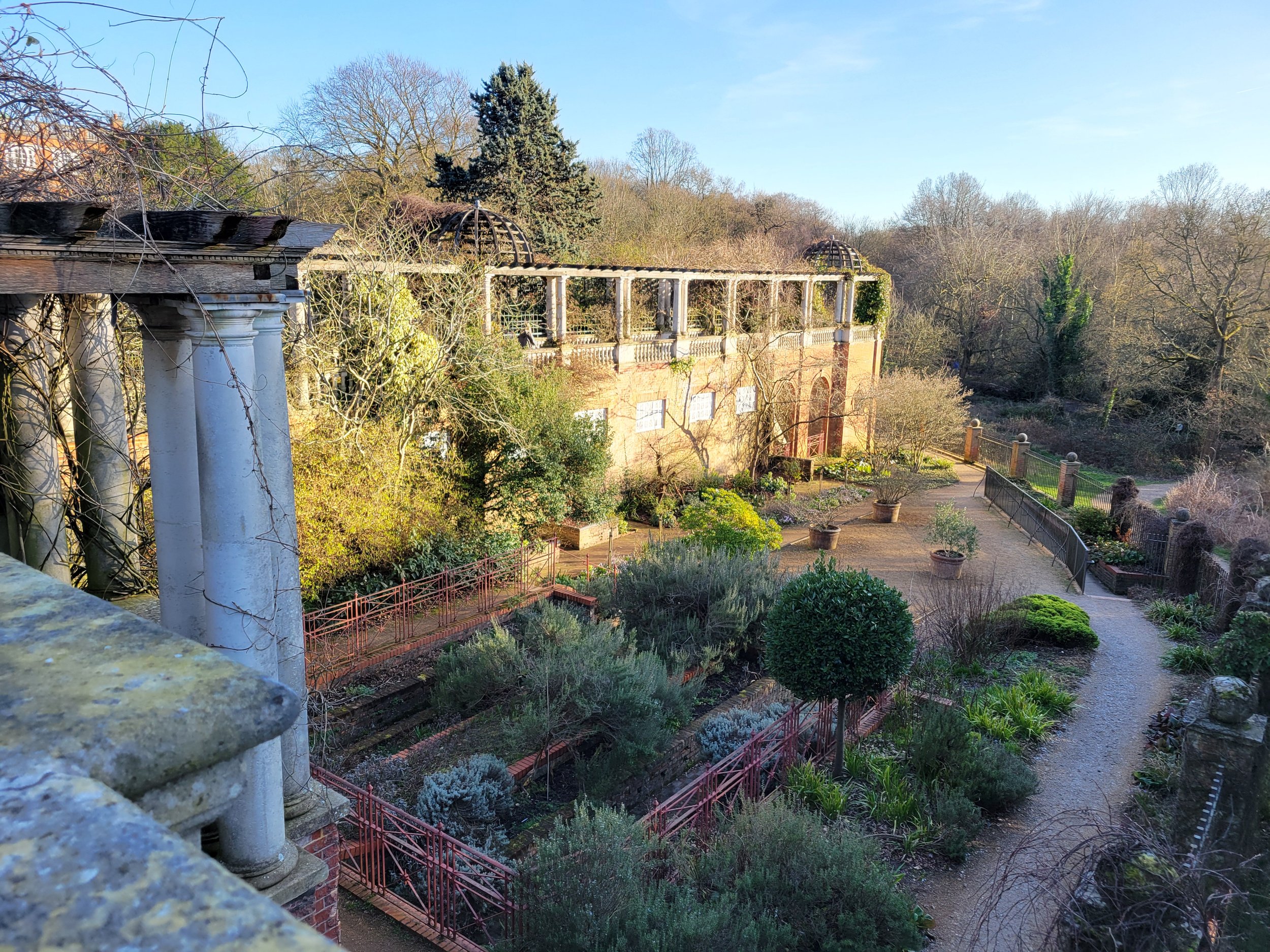
The Hill Garden and Pergola, looked after by our volunteers.
Horticulture is for everyone, whether you’re a pruning pro or an absolute beginner. In a city where many people don’t have access to a garden, horticultural volunteering offers the opportunity to cultivate your very own slice of green to share with your community, and learn valuable skills along the way. Volunteering can also be a great way to gain experience if you’re looking to move into the sector, getting you used to working alongside professional teams. We run a work experience programme here at Heath Hands and some of the sites we work with also recruit apprenticeships, offering entry-level opportunities to employment.
Why not come along to one of our open sessions, and give it a go yourself?